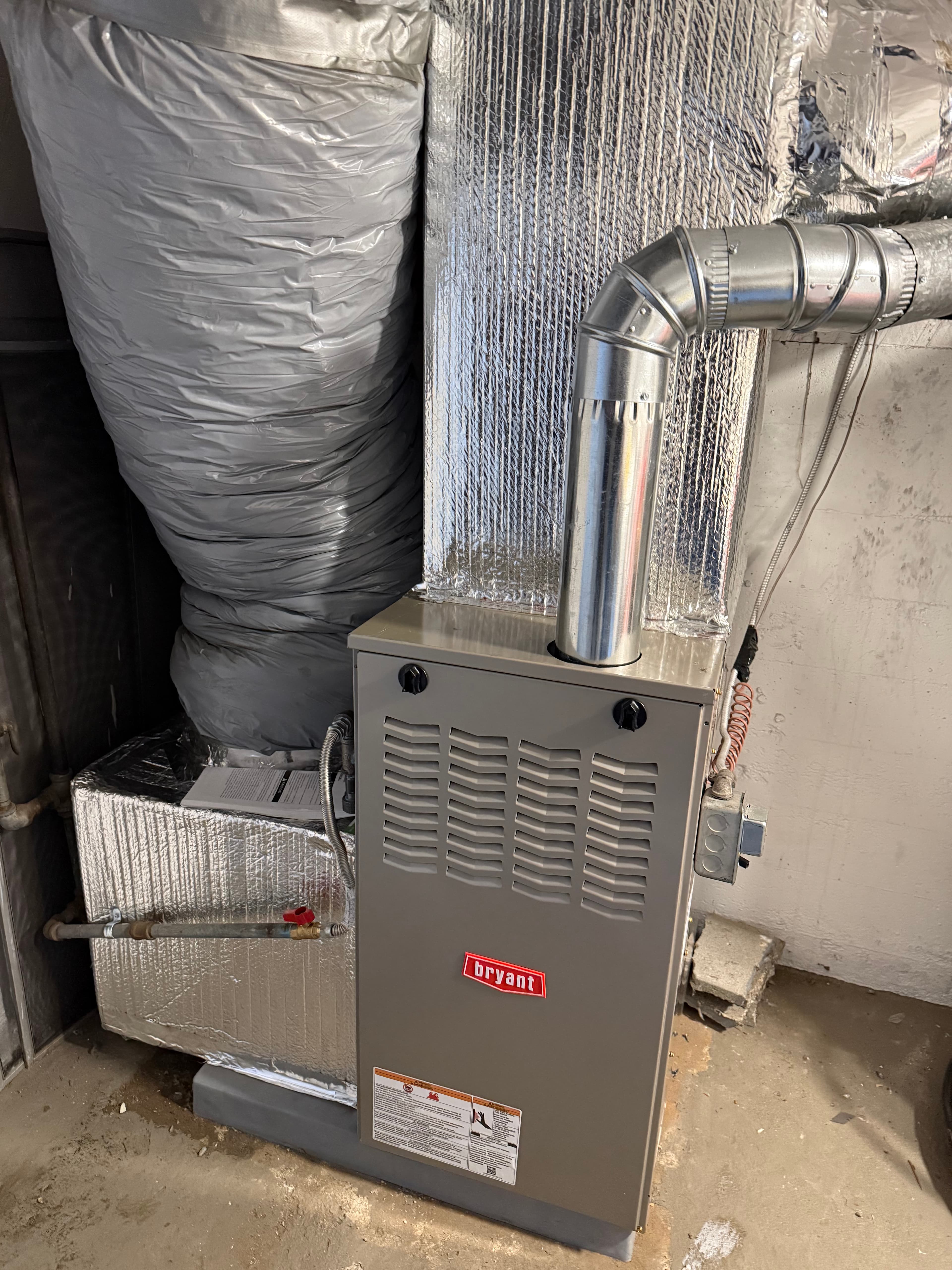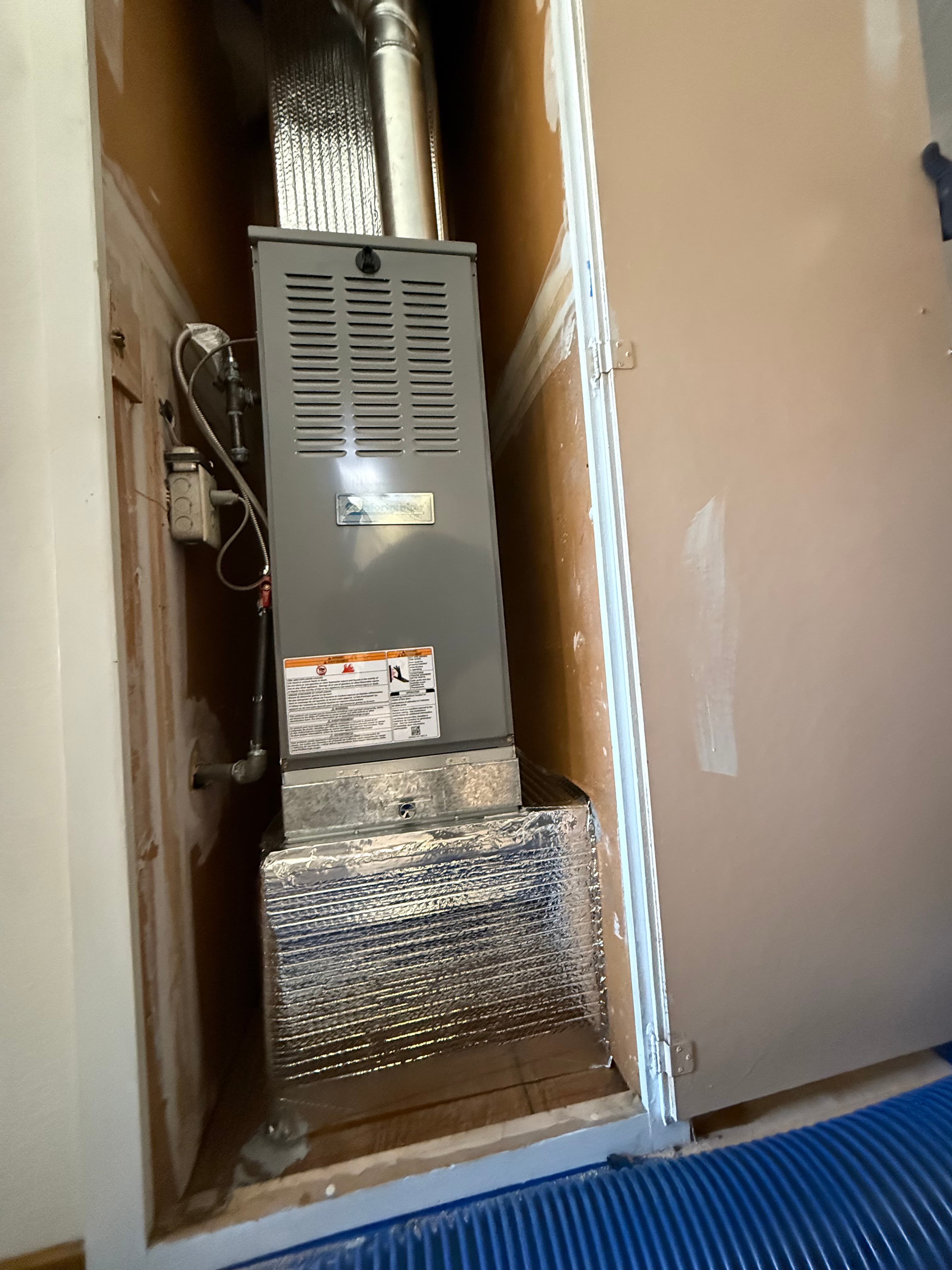
Ask five companies what a furnace replacement costs and you'll get five non-answers — "it depends," a sales visit, or a range so wide it tells you nothing. So here are real numbers, from us: a local, owner-operated Santa Clara company that installs furnaces every week. For a typical Bay Area home, a gas furnace replacement runs $4,500–$6,500 installed — permits, removal of the old unit, and cleanup included. Below is what moves a specific job above or below that range, and what a quote should always include.
What $4,500–$6,500 Includes
That range covers a one-to-one gas furnace replacement in an average Bay Area home: right-sized equipment matched to your home, removal and disposal of the old furnace, a new unit installed and tested, the city permit pulled and closed, and the work area left clean. If a quote you're holding doesn't explicitly include the permit and the old-unit removal, expect it to show up later as a line item.
Furnace Replacement Cost by City
EVS prices the same job the same across the South Bay and Peninsula; what changes the cost is the home.
| City | What changes the price there | City guide |
|---|---|---|
| Santa Clara | Older homes may need venting updates and gas line upgrades. | Santa Clara furnace guide · repair |
| Sunnyvale | Post-war ranches with attic or hall-closet furnaces; Fairbrae Eichlers with radiant slabs. | Sunnyvale furnace guide |
| San Jose | Willow Glen and Rose Garden gravity or wall furnaces; Evergreen tract homes. | San Jose furnace guide |
| Mountain View | Mid-century tracts with attic and closet equipment; Eichler radiant-heat conversions. | Mountain View furnace guide |
| Palo Alto | Eichler radiant slabs, older wall-furnace homes, and City of Palo Alto Utilities incentives. | Palo Alto furnace guide |
| Cupertino | Remodels relocating attic equipment and closets; Rancho Rinconada Eichler radiant conversions. | Cupertino furnace guide |
| Los Altos | Old-home wall furnaces; Los Altos Hills propane fuel trains and hillside access. | Los Altos furnace guide |
| Milpitas | Tract-home attic units needing venting retrofits; Calaveras hillside access. | Milpitas furnace guide |
| Campbell | Orchard-era cottages and tight downtown equipment closets; closet and crawlspace access. | Campbell furnace guide |
| Fremont | Niles and Centerville wall or gravity furnaces; Mission San Jose hillside access. | Fremont furnace guide |
No heat right now? Furnace repair in Santa Clara, Sunnyvale, San Jose and Palo Alto.
What Makes a Furnace Job Cost More
- Venting changes — the big one in older Bay Area homes. Many older furnaces vent up a masonry chimney or metal flue; a new high-efficiency (90%+ AFUE) condensing furnace vents through PVC pipe out a side wall instead. Relining or abandoning the old flue is real work, and it's the most common cost driver on pre-1980 housing stock.
- Combustion air — tight, well-insulated homes (retrofitted ranches and Eichlers especially) may need a dedicated combustion-air intake so the new furnace doesn't starve or backdraft the water heater.
- Ductwork problems — damaged, undersized, or leaky ducts discovered during the replacement. Honest contractors flag this during the site visit, not after the unit is in.
- Access — a furnace in a cramped closet or hard-to-reach crawlspace takes longer to swap than one in an open garage.
- Severe weather damage or a cracked heat exchanger with water damage around the unit — cleanup adds time.
What Keeps the Cost Down
- A direct one-to-one swap — same location, same venting category, similar efficiency class.
- Easy access to the equipment location.
- Ducts that are the right size and in good condition — which is exactly why the site visit and load calculation happen before the quote, not after.
Why We Measure Before We Quote
The most expensive furnace mistake in the Bay Area isn't paying too much for equipment — it's installing the wrong size. A furnace sized by a square-footage rule instead of a real Manual J load calculation will short-cycle: turn on and off too often, waste gas, wear out parts faster, and leave rooms unevenly heated. We run the load calculation on every quote, and we verify the furnace, evaporator coil, and matched components form an AHRI-certified combination — because in most Bay Area cities, the permit won't pass inspection without it. That step is invisible until the day it saves your install.
The Quote Test: Does the Number Move After You Sign?
Here's the practical way to compare furnace quotes: ask each company whether the price they write down is the price you pay. We give a final quote after seeing the job — and the final quote is what you pay. No add-ons, no "we found something" upcharges mid-install. If a company can't promise that, the low number on their sheet isn't really their price.
When to Replace vs. Repair
Age alone isn't the trigger. A cracked heat exchanger is the classic replace-now finding — it's the main way carbon monoxide can reach your air, and we check the exchanger on every service visit. Beyond that, the honest math is: repair cost × likelihood of another failure this season vs. the replacement range above. A 20-year-old furnace with a failed blower motor and rust in the cabinet is a different decision from a 10-year-old furnace with a bad ignitor. We'll tell you which one you have — we don't condemn units to sell replacements, and we check voltage and command signals before calling any part dead.
Want a real number for your house — not a range? Book a free site visit and we'll run the load calculation and give you a final quote that stays final. Call (408) 300-8254.